Your bag is empty
Don't miss out on great deals! Start shopping or Sign in to view products added.
Shop What's New Sign in
Due to changes in USD exchange rates, product prices have been revised. Contact us for special offers.
₹5,992.00 excl. GST
Available on Backorder
M.R.P.: ₹6,291.60 Incl. GST
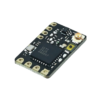
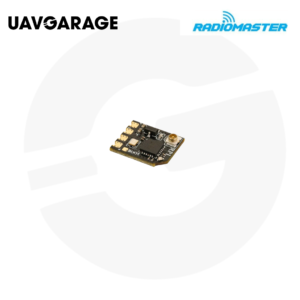
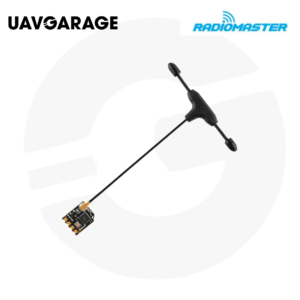
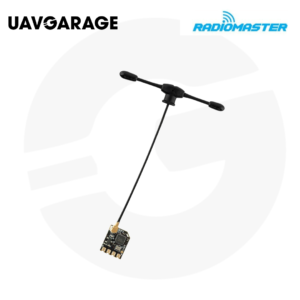
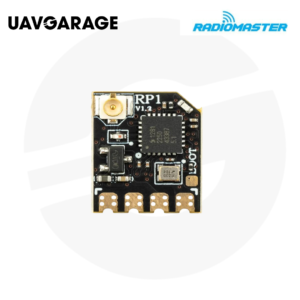
The TBS Crossfire Nano RX is a de-facto standard in the FPV world, condensing two years of engineering into the smallest full-range receiver in the industry. It is specifically designed for mini and micro-quads where every millimeter and gram counts. Utilizing the 915MHz (USA/Asia) and 868MHz (EU) UHF bands, it provides superior penetration through obstacles and a range that extends for several kilometers, far exceeding traditional 2.4GHz systems.
This receiver is built on the robust TBS Crossfire ecosystem, known for its “it just works” reliability. It supports the high-speed CRSF (Crossfire Serial Protocol), which offers ultra-low latency and massive bandwidth for telemetry data. Whether you are racing at a professional level or exploring long-range mountain peaks, the Nano RX ensures a stable link between your transmitter and your aircraft.
The Nano RX is small enough to fit inside a “Tiny Whoop” but powerful enough for a 10-inch Cinelifter. It features a rapid 150Hz update rate, providing a locked-in, immersive flight feel. The receiver is also highly versatile, supporting multiple output protocols including SBUS, PPM, PWM, and MAVLink.
One of its most powerful features is the bidirectional telemetry. This allows you to receive real-time link health (LQ, RSSI, SNR) and flight data (GPS, battery voltage, current) back to your radio. Additionally, it supports SmartAudio and Serial Bridge for controlling your video transmitter or other peripherals directly through the receiver.
The TBS Crossfire Nano RX is the go-to choice for FPV Racing where low latency is critical for victory. In Long-Range Exploration, it provides the peace of mind needed to fly several kilometers away. Micro and Whoop pilots use it to gain full-range capabilities on tiny 1S and 2S platforms. For Cinematographers, it ensures a stable control link while flying through buildings or around heavy structures. Furthermore, it is a staple in Robotics R&D for its ability to bridge MAVLink data wirelessly. Finally, it is ideal for Fixed-Wing pilots who require a reliable link for autonomous soaring.
| Weight | 10 g |
|---|---|
| Dimensions | 15 × 10 × 2 cm |
| Unit of Measurement | Piece |
| Country of Origin | China |